
Contents
Overview
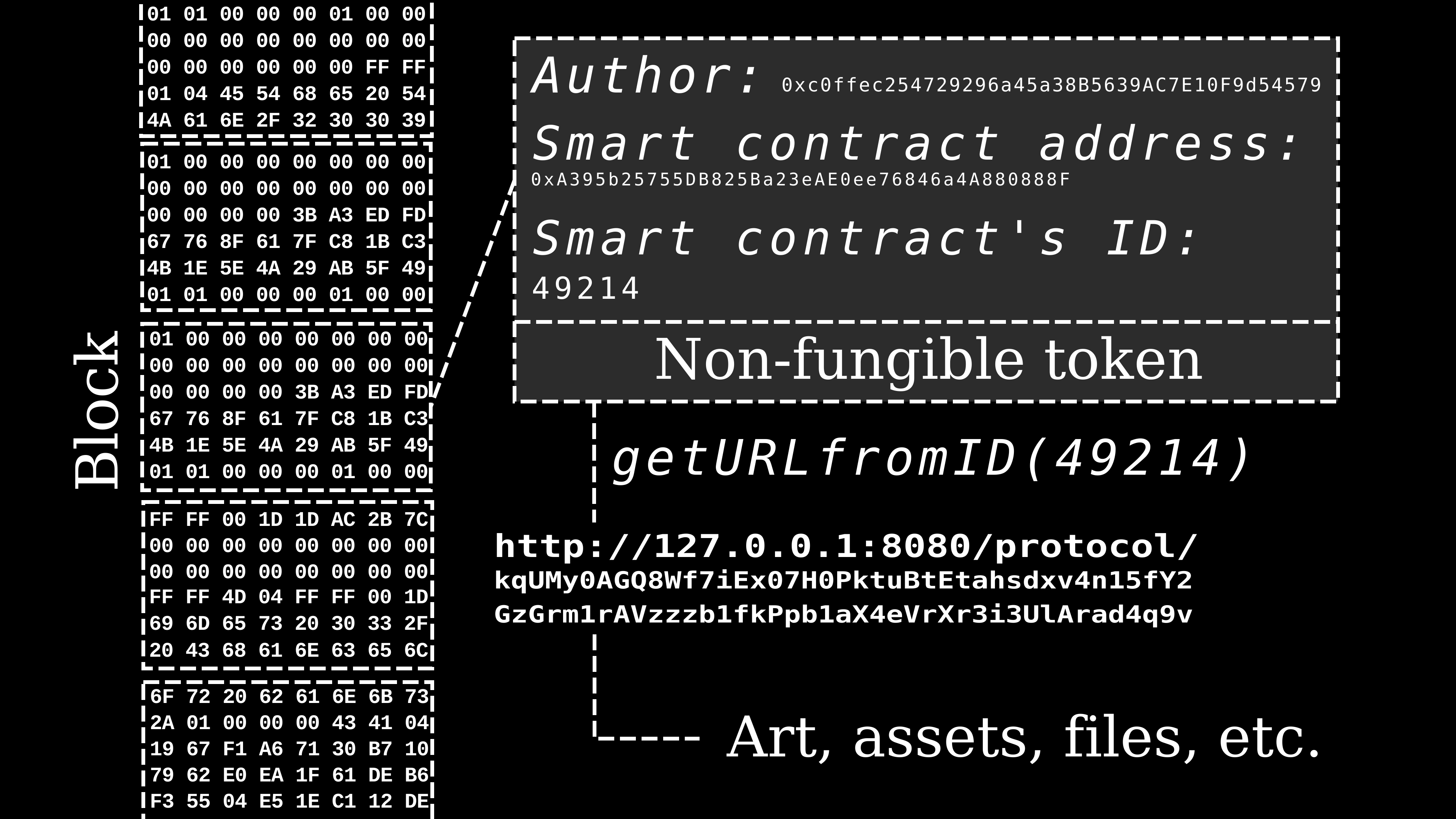
A Non-Fungible Token (NFT) is a cryptographic token that represents a unique asset. The term 'non-fungible' means that each token is one-of-a-kind and cannot be replaced by another identical item. This stands in contrast to 'fungible' assets, such as currency or cryptocurrencies like Ether, where each unit is interchangeable with another. NFTs serve as a verifiable digital certificate of ownership and authenticity for a specific asset, often a digital file. The metadata associated with an NFT can link to the actual asset, which might be digital art, a collectible, a piece of music, a video clip, or even virtual land in a metaverse platform.
🔬 How It Works (Mechanics)
NFTs function by leveraging blockchain technology to create a transparent and immutable ledger of ownership. When an NFT is 'minted,' its unique identifier and associated metadata are recorded on the blockchain. This process typically involves a smart contract, a self-executing contract with the terms of the agreement directly written into code, often written in Solidity for Ethereum. Each transaction involving the NFT—such as its initial creation, sale, or transfer—is added to the blockchain as a new block, creating a verifiable history of ownership, known as provenance. This ensures that the ownership of the digital asset is publicly verifiable and resistant to tampering. Popular standards for NFTs include ERC-721 and ERC-1155 on Ethereum.
📊 Key Facts, Numbers & Statistics
The NFT market experienced significant fluctuations. Iconic examples of NFTs include CryptoPunks, one of the earliest generative art projects on Ethereum, and Bored Ape Yacht Club (BAYC), a collection of profile picture NFTs that gained significant cultural traction and celebrity endorsement. In gaming, NFTs are used to represent in-game assets, such as unique weapons or characters, allowing players to truly own and trade them outside the game's ecosystem, as seen in titles like Axie Infinity.
🌍 Real-World Examples & Use Cases
The concept of NFTs began to gain traction around 2017 with projects like CryptoKitties. This project highlighted the potential for unique digital assets on the blockchain. The subsequent development of standards like ERC-721 provided a framework for creating distinct digital tokens. Major brands and artists are still experimenting with NFTs. The underlying blockchain infrastructure is also evolving, with ongoing research into more energy-efficient and scalable solutions for minting and trading NFTs.
📈 History & Evolution
NFTs matter because they introduce a novel paradigm for digital ownership, scarcity, and provenance in the digital realm. For creators, they offer new avenues for monetization and direct engagement with their audience, potentially bypassing traditional intermediaries. For collectors and investors, NFTs provide a way to own unique digital assets with verifiable authenticity. The technology's potential extends beyond art and collectibles, with applications being explored in ticketing, digital identity, supply chain management, and intellectual property rights. The future trajectory will likely depend on the development of sustainable use cases, improved user experience, and regulatory clarity.
⚡ Current State & Latest Developments
A common misconception is that buying an NFT means buying the copyright to the associated digital file. In most cases, purchasing an NFT grants ownership of the token itself and a license to use the associated asset under specific terms, not full copyright. Another misconception is that all NFTs are environmentally damaging due to the energy consumption of some blockchains; however, newer blockchain protocols and Proof-of-Stake consensus mechanisms are significantly more energy-efficient. Finally, the idea that NFTs have no intrinsic value is often debated; proponents argue their value lies in their uniqueness, provenance, and the community or utility they represent, akin to physical collectibles.
Key Facts
- Year
- 2017 (popularization)
- Origin
- Digital/Blockchain
- Category
- definitions
- Type
- technology
- Format
- what-is
Frequently Asked Questions
What exactly is a non-fungible token (NFT)?
A non-fungible token (NFT) is a unique digital identifier recorded on a blockchain, used to certify ownership and authenticity of an asset. Unlike fungible tokens like Bitcoin, where each unit is identical and interchangeable, each NFT is distinct. This uniqueness allows NFTs to represent ownership of specific digital items such as digital art, music, videos, or virtual real estate, with their provenance tracke